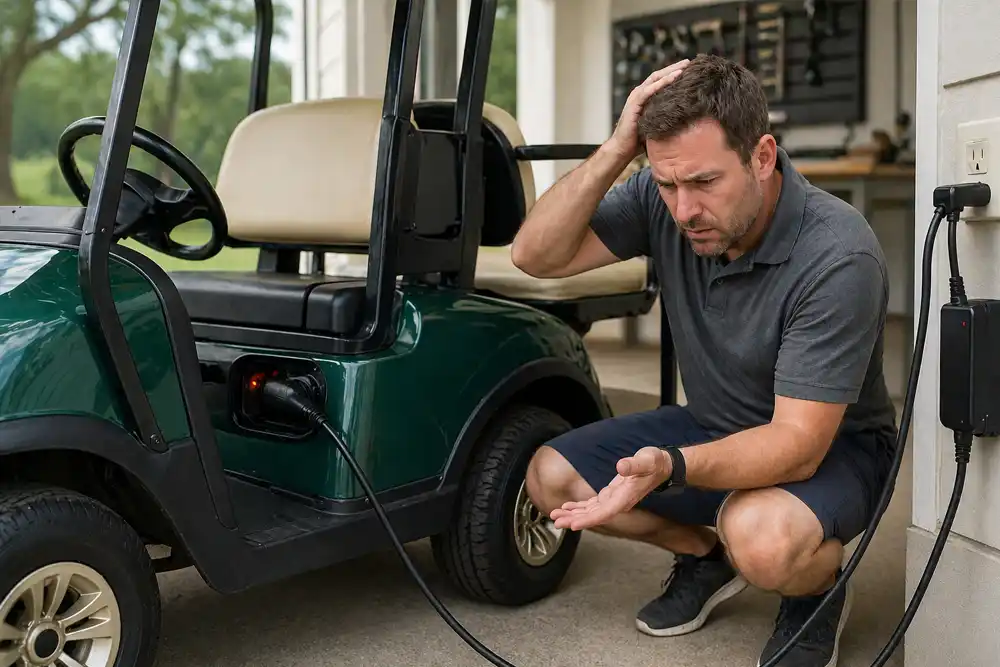
Few things are more frustrating than plugging in your golf cart at the end of the day and coming back to find it still dead. Whether you use your cart for neighborhood transportation, coastal cruising, or work around your property, a charging issue can bring everything to a halt. In California, where golf carts are used in planned communities, beach towns, and even for short commutes, keeping your cart reliable is essential.
Charging problems are often misunderstood. Many owners assume the battery is dead, but in reality, the issue can come from several different sources including wiring, chargers, environmental conditions, or even state specific usage patterns. This guide breaks down the most common causes of charging failure and explains how to fix them in a practical and efficient way.
Golf Cart Won’t Charge Summary
If your golf cart will not charge, the issue is usually related to the battery, charger, or electrical connections. In California, heat exposure, coastal corrosion, and frequent short trips can accelerate wear. Start by checking battery voltage and water levels, then inspect cables and the charger. In many cases, replacing worn components or cleaning connections resolves the issue. Consistent maintenance is the best way to prevent charging failure.
Step by Step Guide to Fix a Golf Cart That Will Not Charge
If your golf cart will not charge, follow this process in order. This approach helps you avoid replacing parts unnecessarily and gets you to the root of the issue faster.
Step 1: Check the Battery Voltage
Start by measuring the total battery pack voltage using a multimeter. If the voltage is extremely low, many chargers will not recognize the batteries and will not turn on.
If your reading is below the minimum threshold for your system, the batteries may need a manual boost charge or replacement.
Step 2: Inspect Battery Water Levels
Open each battery cap and check the water level. In California heat, water evaporates quickly and can expose the internal plates.
If levels are low, refill with distilled water only. Never use tap water. After refilling, try charging again.
Step 3: Clean Battery Terminals
Look for corrosion on terminals. This often appears as a white or green buildup.
Disconnect the cables, clean each terminal with a battery cleaning solution or baking soda and water, then reconnect tightly. Poor connections are one of the most common causes of charging failure.
Step 4: Check All Cables and Connections
Inspect wiring from the charging port to the batteries. Look for loose connections, frayed wires, or signs of heat damage.
Tighten any loose cables and replace damaged wiring if needed.
Step 5: Test the Charger
Plug in your charger and observe whether it turns on. Listen for a click or cooling fan.
If nothing happens, test your charger on another cart or try a known working charger on your cart. This helps isolate the issue quickly.
Step 6: Inspect the Charging Port
Examine the charging port for dirt, sand, or corrosion. This is especially important in coastal California areas.
Clean the port carefully using a dry cloth or electrical cleaner. Make sure the charger plug fits securely.
Step 7: Allow Batteries to Cool
If your cart has been sitting in high heat, the batteries may be too hot to accept a charge.
Move the cart to a shaded area and allow it to cool down before attempting to charge again.
Step 8: Evaluate the Controller or Onboard System
If all previous steps fail, the issue may be with the onboard computer or controller.
At this point, professional diagnostics are recommended since these systems require specialized tools.
Step 9: Decide Between Repair or Replacement
If your batteries are older and multiple issues are present, replacing the battery pack or upgrading to lithium may be the most cost effective solution.
Why Golf Carts Fail to Charge in California
California presents unique challenges for golf cart owners. Coastal regions expose carts to salt air, which accelerates corrosion. Inland areas deal with extreme heat, especially in places like Riverside and Bakersfield. Both conditions can reduce battery life and damage charging systems.
Another factor is usage. Many California owners rely on their carts for daily transportation in gated communities. Frequent short trips without full recharge cycles can lead to battery imbalance over time. This pattern slowly reduces the ability of the batteries to accept a charge.
Understanding these environmental and usage factors helps identify the root cause faster.
Battery Issues Are the Most Common Cause
The battery is the first place to look when your golf cart will not charge. Lead acid batteries, which are still widely used, degrade over time. If your batteries are more than three to five years old, they may no longer hold a charge effectively.
Low water levels are another common issue. In hot California climates, water evaporates faster, which can expose battery plates and cause permanent damage. Always check water levels and refill with distilled water when necessary.
Corrosion on battery terminals can also interrupt charging. A buildup of white or green residue reduces conductivity and prevents the charger from delivering power properly.
If your batteries show swelling, leaking, or significant voltage imbalance, replacement is usually the only solution.
Charger Problems and Malfunctions
A faulty charger can easily be mistaken for a battery issue. Chargers have internal components that regulate voltage and current. When these fail, the charger may not turn on or may shut off prematurely.
In California, power fluctuations and heat can wear down charger circuits over time. If your charger does not activate when plugged in, check for indicator lights or sounds. A silent charger often points to an internal failure.
Compatibility is another factor. Using the wrong charger for your battery type can prevent proper charging. Lithium batteries require specific chargers, and using a lead acid charger will not work correctly.
Testing with a known working charger is one of the fastest ways to confirm whether the charger is the issue.
Loose or Damaged Wiring
Electrical connections play a critical role in the charging process. Over time, vibration and use can loosen cables. Even a slightly loose connection can prevent the charger from completing the circuit.
Inspect all cables running from the charger port to the batteries. Look for frayed wires, melted insulation, or disconnected terminals. In coastal areas, salt exposure can corrode connectors and reduce conductivity.
Cleaning terminals and tightening connections often restores proper charging. In more severe cases, replacing damaged cables is necessary.
Charging Port and Receptacle Issues
The charging port is often overlooked but can be a key failure point. Dirt, debris, and corrosion can build up inside the port, especially in outdoor environments.
In California beach communities, sand and salt are common culprits. These materials can block the connection between the charger and the cart.
Inspect the port carefully. If you notice bent pins or buildup, clean it gently using a dry cloth or electrical contact cleaner. Avoid using water, as moisture can worsen the problem.
Faulty Onboard Computer or Controller
Modern golf carts often include an onboard computer or controller that regulates charging. If this system fails, it may prevent the charger from activating even if everything else is functioning correctly.
This is more common in newer carts with advanced features. Diagnosing controller issues typically requires a technician, as it involves specialized tools and software.
If you have ruled out batteries, charger, and wiring, the controller becomes a likely suspect.
Temperature Related Charging Problems
California heat can significantly impact charging performance. Batteries do not accept charge efficiently at extremely high temperatures. Some chargers include safety features that prevent charging when temperatures exceed safe limits.
If your cart is stored in a garage or outdoors in direct sunlight, the battery temperature may be too high for charging to begin.
Allow the cart to cool down before attempting to charge again. Storing your cart in a shaded or ventilated area can prevent this issue.
How to Fix a Golf Cart That Will Not Charge
Start with a systematic approach. Begin by checking the simplest issues first before moving to more complex components.
Check battery voltage using a multimeter. If the voltage is extremely low, the charger may not recognize the batteries. In this case, a manual charge or battery replacement may be required.
Inspect and clean all terminals. Remove corrosion and ensure connections are tight. This alone resolves a large percentage of charging issues.
Test the charger on another cart or use a different charger on your cart. This helps isolate whether the problem is with the charger or the cart itself.
If all else fails, consult a professional technician. Electrical systems can become complex, especially in newer models.
Preventing Future Charging Problems
Prevention is always more cost effective than repair. Regular golf cart maintenance extends the life of your golf cart and reduces downtime.
Keep batteries properly filled with distilled water. Clean terminals regularly and apply protective coatings if needed.
Avoid letting batteries fully discharge. Frequent deep discharges shorten battery life and reduce charging efficiency.
Store your cart in a cool, dry location. This is especially important in California where heat and coastal air can accelerate wear.
Schedule periodic inspections to catch small issues before they become major problems.
When to Replace Instead of Repair
Sometimes the cost of repair exceeds the value of replacement. If your batteries are several years old and no longer hold a charge, replacing them is often the best solution.
Similarly, if multiple components such as the charger and wiring are failing, investing in a new system may save money in the long run.
For California users who rely heavily on their carts, upgrading to lithium batteries can provide longer life, faster charging, and better performance in varying temperatures.
Conclusion
A golf cart that will not charge is a common problem, but it is rarely complicated once you understand the possible causes. In California, environmental factors like heat and coastal air add an extra layer of wear that owners need to consider.
By checking batteries, charger, wiring, and environmental conditions, most issues can be diagnosed and fixed quickly. Regular maintenance and proper storage go a long way in preventing these problems from happening in the first place.
FAQs
Why is my golf cart not charging even though the charger is plugged in?
This usually means the batteries are too low to trigger the charger or there is a connection issue preventing power flow.
How do I know if my golf cart charger is bad?
If the charger does not turn on or fails to deliver consistent voltage, it may be faulty. Testing with another charger confirms this.
Can extreme heat affect golf cart charging?
Yes high temperatures common in California can prevent batteries from accepting a charge and may trigger safety shutoffs.
How often should I replace golf cart batteries?
Most lead acid batteries last between three to five years depending on usage and maintenance.
What should I do if my golf cart batteries are completely dead?
You may need to manually charge them or replace them if they cannot recover voltage.
Is it better to upgrade to lithium batteries?
Lithium batteries offer longer lifespan faster charging and better performance especially in varying climates.