
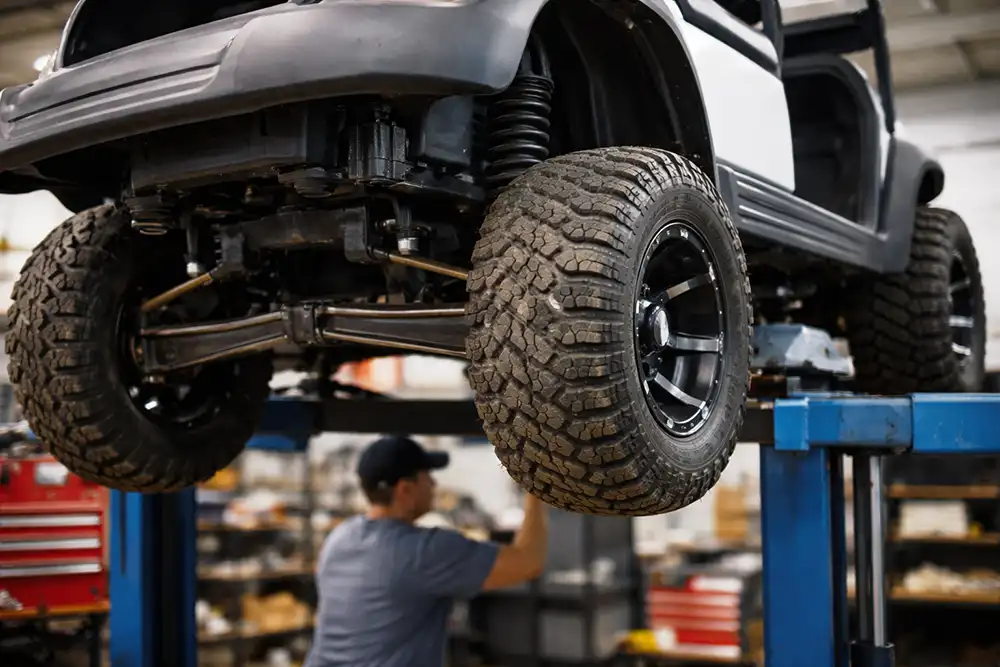
9 Smart Fixes If Your Golf Cart Has Too Much Suspension (Safety Guide)
Golf cart modifications are more popular than ever. Owners install lift kits, larger tires, upgraded motors, or even engine swaps to create unique builds. But one problem that often shows up after major changes is too much suspension stiffness or incorrect suspension balance.
This can happen when weight is drastically reduced or when incompatible parts are installed. A golf cart that once rode smoothly can suddenly feel like a rigid wagon or “buckboard,” barely moving when weight is applied.
If your golf cart suspension feels too stiff or unresponsive, it’s more than just a comfort issue—it can also affect handling, stability, and safety. Fortunately, there are several ways to diagnose and fix the problem.
Why Golf Carts End Up With Too Much Suspension
Suspension systems are designed around specific weight ranges. When that weight changes significantly, the springs and shocks may no longer behave properly.
Some common causes include:
- Removing heavy battery packs during conversions
- Installing overly stiff lift kits
- Using springs designed for heavier carts
- Removing cargo boxes or rear seats
- Engine swaps that alter weight distribution
For example, many electric golf carts carry 300–500 pounds of batteries. Removing them during a gas conversion drastically changes how the suspension behaves.
When that weight disappears, the springs may barely compress at all.
Signs Your Golf Cart Suspension Is Too Stiff
You might notice several symptoms if your suspension setup isn’t matched to your cart’s weight.
Common warning signs
- The rear of the cart barely moves when weight is applied
- The ride feels extremely harsh on bumps
- The cart “skips” or bounces over rough terrain
- Tires lose contact with the ground on uneven surfaces
- Suspension barely compresses even with passengers
Some owners notice they can jump on the rear of the cart and it hardly moves. That’s usually a clear sign the springs are far too stiff for the current weight.
Safety Concerns of Too Much Suspension
While a stiff suspension might not sound dangerous, it can actually create several safety issues.
Reduced traction
If the suspension cannot compress properly, the tires may lose contact with the ground over bumps or uneven surfaces.
Less traction means:
- Poor braking performance
- Reduced steering control
- Higher risk of sliding on loose terrain
Increased rollover risk
When the suspension cannot absorb bumps, the cart may bounce instead of absorbing impacts.
This can make the cart less stable, especially on:
- Hills
- Off-road trails
- Uneven pavement
Frame and component stress
A suspension system normally absorbs shock from the road. When springs are too stiff, those impacts transfer directly into:
- The frame
- Steering components
- Motor mounts
- Axles
Over time, this can cause premature wear or damage.
Common Situations Where This Happens
Too much suspension stiffness usually appears after major modifications.
Electric to gas conversions
Electric carts rely on heavy batteries to compress the suspension. When those batteries are removed, the springs may suddenly become far too stiff.
Oversized lift kits
Some lift kits use heavy-duty springs designed for utility carts carrying cargo.
When installed on lighter carts, they can create an overly rigid ride.
Weight redistribution
Changing where the weight sits on the cart can also cause suspension imbalance.
Examples include:
- Rear seat removal
- Engine swaps
- Custom cargo beds
- Removing rear battery banks
Possible Fixes for Too Much Suspension
The good news is that several solutions can improve ride quality and restore proper suspension movement.
1. Install Softer Leaf Springs
Golf carts typically use leaf spring suspension, which can vary in stiffness depending on the number of leaves and thickness.
Switching to softer springs may help the suspension compress properly again.
This is often the cleanest and most reliable solution when weight has been permanently reduced.
2. Remove a Leaf From the Spring Pack
Some builders experiment with removing one leaf from the spring pack to soften the suspension.
This can work in certain situations, but it should be done carefully.
Removing too many leaves can lead to:
- Sagging suspension
- Poor load capacity
- Spring damage
Testing and careful measurement are important.
3. Install Adjustable Air Shocks
Air shocks allow you to adjust suspension stiffness depending on load.
For example:
- Lower pressure for normal driving
- Higher pressure when carrying passengers
This can be a flexible option if your cart sometimes carries multiple passengers or heavy cargo.
4. Add Adjustable Coilover Shocks
Another option is switching to shocks with adjustable damping or coilovers.
These systems give you more control over:
- Compression
- Ride height
- Shock stiffness
While more expensive, they can greatly improve ride quality.
5. Redistribute Weight
Sometimes suspension problems are caused by poor weight distribution.
Adding weight or repositioning components may help the springs behave normally again.
For example:
- Relocating batteries
- Moving cargo
- Adjusting engine placement
Even small changes can affect suspension performance.
When a Golf Cart Repair Shop Should Get Involved
If you’re unsure about modifying your suspension, a professional shop can help diagnose the problem.
Experienced technicians can:
- Measure spring compression
- Evaluate suspension geometry
- Recommend compatible springs
- Identify unsafe modifications
This is especially helpful when dealing with custom builds, engine conversions, or heavy lift kits.
A shop may also recommend upgrades that improve both ride comfort and safety.
How Suspension Should Normally Behave
In a properly tuned golf cart suspension:
- The cart compresses slightly under normal load
- Springs absorb bumps smoothly
- Tires stay planted on the ground
- The ride feels stable without excessive bouncing
Suspension should move—but not too much.
Finding that balance is key to both comfort and safety.
Golf Cart Suspension Problems FAQ
This often happens when the springs are too stiff for the cart’s current weight. Removing heavy batteries or installing heavy-duty springs can cause this.
Yes, if done incorrectly. Removing too many leaves can weaken the suspension and lead to sagging or breakage.
Air shocks can work well if your cart carries different loads at different times. They allow you to adjust suspension stiffness as needed.
It can be. A suspension that doesn’t compress properly can reduce traction, increase bouncing, and make the cart harder to control.
Often yes. Electric carts are designed around the weight of the battery pack. Removing that weight may require softer springs.
Absolutely. Golf cart repair shops can evaluate suspension setup and recommend the correct springs or upgrades for your specific build.
Final Thoughts
Too much suspension stiffness is a common issue after golf cart modifications—especially when heavy batteries are removed or lift kits are installed.
While the cart might still function, an overly stiff suspension can affect ride comfort, traction, and safety.
Fortunately, solutions like softer springs, adjustable shocks, or professional suspension tuning can restore proper ride quality.
If you’re unsure which direction to take, consulting a golf cart repair shop can help ensure your build stays both comfortable and safe.
