Summary: Evolution golf carts are generally reliable machines, but like any electric vehicle, the most common owner complaints center on battery performance, charger compatibility, and, occasionally, touchscreen responsiveness. Most issues traced back to maintenance habits rather than factory defects. Parts availability and service support have improved steadily as the brand has expanded in the United States. Buyers who purchase through an authorized Evolution dealer and follow the manufacturer’s maintenance schedule experience significantly fewer problems than those who purchase from secondary sources or skip routine care.
Before spending $12,000 to $20,000 on a new golf cart, most buyers do something smart: they search for problems. Not features, not specs, problems. If you’ve landed here, you’re doing exactly that, and that’s a good sign you’re approaching this purchase seriously.
At Central Valley Carts in Visalia, we’ve sold and serviced Evolution golf carts long enough to know what’s genuinely worth worrying about and what’s internet noise amplified by a small number of frustrated owners. This guide gives you an honest breakdown of what Evolution golf cart owners actually experience.
Battery Performance: The Most Common Concern
If you spend any time reading Evolution golf cart forums or owner groups, battery issues surface more than anything else. The important context is that most of those complaints aren’t about the batteries failing without cause, they’re about the consequences of poor charging habits.
Evolution carts typically ship with either flooded lead-acid (FLA) batteries or lithium-ion options depending on the model and trim level. Flooded lead-acid batteries require periodic watering, consistent charging after every use, and a full charge before storage. Owners who skip these steps see dramatically shortened battery life regardless of brand. This isn’t an Evolution-specific problem, it’s the reality of lead-acid battery chemistry.
Lithium-equipped models are considerably more forgiving. They don’t require watering, tolerate partial charge cycles better, and tend to generate far fewer owner complaints. If battery anxiety is a real concern for you, asking about lithium battery options at the time of purchase is worthwhile.
Signs your battery pack may need attention include reduced range, slower acceleration, difficulty holding a charge, and the cart struggling on inclines it used to handle easily. Many of these symptoms can also be caused by golf cart accelerator problems that are unrelated to battery health, so proper diagnosis matters before assuming the pack needs replacement.
Charger Issues and Compatibility
A subset of battery complaints actually trace back to the charger rather than the battery itself. Charger malfunctions, including units that stop mid-cycle, fail to recognize the battery pack, or deliver inconsistent voltage, have been reported by a segment of Evolution owners.
The practical advice here is straightforward: if your cart isn’t behaving normally and the battery pack is relatively new, have your dealer test the charger before assuming the batteries are at fault. Charger replacement is far less expensive than a battery pack swap, and misdiagnosis is surprisingly common with DIY troubleshooting.
Aftermarket chargers are another source of problems. Using a charger not approved for your specific Evolution model can result in overcharging, undercharging, or voided warranty coverage. Stick with the manufacturer-approved unit.
Touchscreen and Display Questions
Evolution carts, particularly models in the D-Max and Classic series, feature digital display panels that show battery level, speed, and other vehicle data. Some owners report early display sluggishness, touchscreen responsiveness issues, or screens that dim unexpectedly.
These issues are real but not widespread. When they do occur, they’re typically resolved through software updates or dealer recalibration rather than hardware replacement. The bigger concern is owners who don’t know this and assume the entire display system needs to be replaced, which drives unnecessary repair costs.
If you’re experiencing display issues, contact your authorized Evolution dealer before sourcing replacement parts independently. In most documented cases, a software correction or connection reseat fixes the problem at minimal or no cost under warranty.
Service and Parts Availability
A few years ago, parts availability was a legitimate criticism of the Evolution brand in the United States. The dealer network was smaller, and wait times for specific components could stretch longer than buyers expected. That landscape has changed.
Evolution has expanded its authorized dealer network and improved domestic parts distribution considerably. Buyers who purchase through established dealers, rather than private party or non-authorized resellers, benefit from factory support channels that weren’t as accessible when the brand first entered the US market.
This is one of the clearest practical arguments for buying from an authorized dealer. If something goes wrong and you need a controller, motor component, or body panel, your dealer can access factory inventory in a way that an independent repair shop or private buyer simply cannot.
Warranty Coverage: What’s Real and What to Watch For
Evolution’s warranty coverage is competitive with other brands in its class, but the details matter. The standard limited warranty covers the vehicle structure and drivetrain for two years from the date of purchase. Battery warranty terms vary by model and battery chemistry, so confirming those specifics at the time of sale, in writing, is important.
Warranty claims that get denied most often involve damage from improper charging, use outside of intended operating conditions, or modifications made without factory authorization. None of those are manufacturer defects, but owners sometimes frame them as warranty issues when they’re not.
If you’re comparing Evolution’s warranty against other brands, also look at what the warranty actually covers. A longer stated term that excludes battery coverage or requires specific service intervals is often less useful than a shorter warranty with broader coverage.
What Problems Are Internet Myths
Forum posts about any golf cart brand tend to overrepresent bad experiences. Someone with a working cart rarely logs on to say everything is fine. That means the complaints you read online, including Evolution-specific threads, almost certainly paint a more negative picture than the actual ownership experience reflects.
Claims that Evolution carts “fall apart in two years” or have “constant electrical failures” don’t align with what we see at our dealership or with owner satisfaction data from verified buyers. The brand has been growing in the US for several years, and a product with those failure rates would not be sustaining that growth.
The most reliable signal you can get isn’t a forum thread, it’s talking to actual owners in your area or test driving the specific model you’re considering. We encourage that conversation.
Evolution D-Max Specific Notes
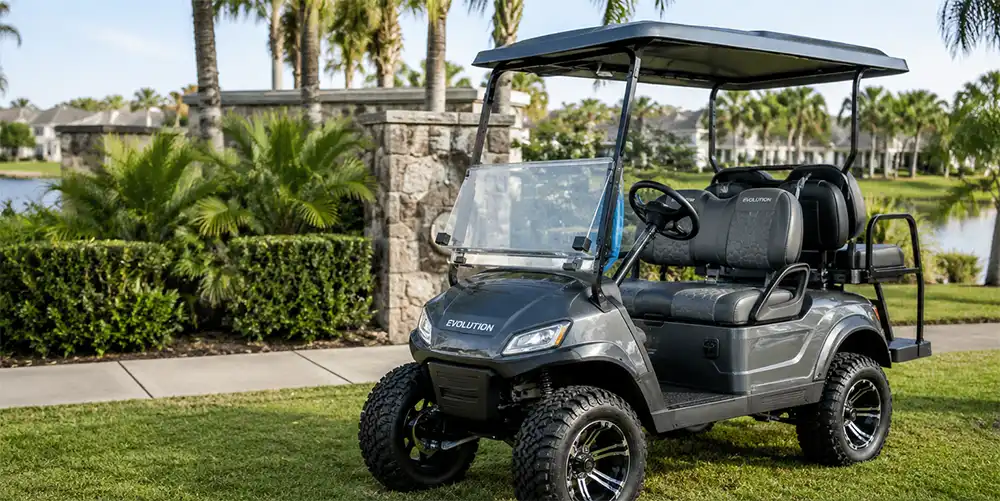
Because the Evolution D-Max is one of the brand’s most visible and heavily marketed models, it generates more online discussion, and more complaint posts, than other Evolution vehicles simply due to volume. Most D-Max-specific complaints mirror the general themes above: battery care and charger compatibility rather than structural or mechanical issues.
The D-Max does carry a more complex suspension and lifted configuration than entry-level Evolution models, which means any out-of-spec component has more places to create noticeable symptoms. Squeaks, shimmy at higher speeds, and minor steering play are occasionally mentioned by D-Max owners, and while these are worth addressing, they’re typically traceable to simple adjustments or bushing wear rather than fundamental design problems.
If you’re comparing the D-Max against a competing lifted cart before purchase, our Evolution D-Max vs Epic E60FX comparison walks through both vehicles side by side.
Should These Problems Stop You From Buying?
Not in our assessment. Every golf cart brand generates a thread of complaints if you search hard enough — including brands that have been building carts for fifty years. The question isn’t whether problems exist, but whether they’re proportionate to the price and whether they’re manageable when they do occur.
Evolution problems, in the vast majority of documented cases, are either maintenance-related (and therefore preventable) or resolved under warranty when they’re genuine defects. That’s a reasonable track record for a cart in this price range.
What we’d caution against is buying any golf cart, Evolution or otherwise, from a non-authorized source to save a few hundred dollars upfront, then expecting full manufacturer support when something goes wrong. That’s a false economy that costs more in the long run.
Questions about a specific Evolution model? Contact our team in Visalia or visit our showroom. We’re happy to walk through any concerns before you commit to a purchase.
Frequently Asked Questions
Are Evolution golf carts reliable?
Evolution golf carts are generally reliable when properly maintained. Most reported issues stem from battery care habits or charging mistakes rather than manufacturing defects. When maintained correctly, owners report strong long-term performance.
What is the most common Evolution golf cart problem?
Battery performance issues are the most frequently reported concern, typically caused by inconsistent charging habits, failure to water batteries on flooded lead-acid models, or leaving the cart discharged for extended periods.
Do Evolution golf carts have parts availability issues?
Parts availability has improved significantly as Evolution has grown in the US market. Working with an authorized Evolution dealer like Central Valley Carts ensures access to factory parts and warranty support.
How long is the Evolution golf cart warranty?
Evolution Golf Carts typically offer a two-year limited warranty on the vehicle structure and drivetrain components. Battery warranty terms vary by model and battery type. Confirm warranty details with your dealer at the time of purchase.
Is the Evolution D-Max a good golf cart?
The Evolution D-Max is one of the brand’s most popular lifted models and is well-regarded for off-road capability, ride quality, and technology features. Most reliability concerns about the D-Max involve battery maintenance rather than structural or mechanical failure.
Do Evolution golf carts have screen problems?
Some owners report early display or touchscreen responsiveness issues, but these are not widespread across the product line. Software updates and dealer recalibration typically resolve display concerns when they occur.